
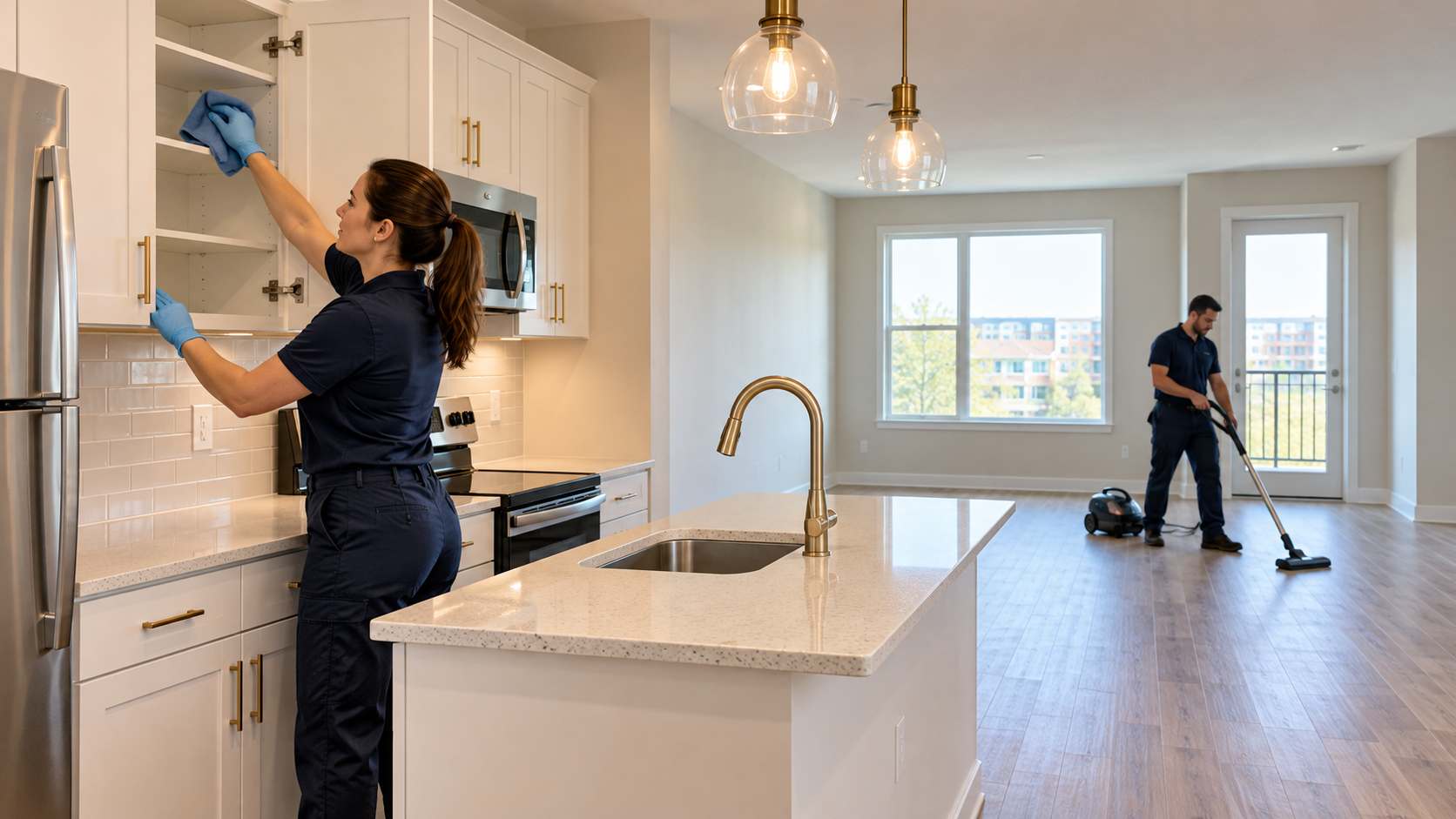
An apartment turnover is more than a routine cleaning visit. It is a short, coordinated window between move-out, maintenance, inspection, marketing, and the next resident’s arrival. When responsibilities are unclear, small details can be missed and work may need to be repeated.
For property managers and apartment owners in Racine, Kenosha, Milwaukee, Pleasant Prairie, Mount Pleasant, Caledonia, Oak Creek, Franklin, Burlington, and nearby Southeast Wisconsin communities, a written turnover checklist can make the process easier to inspect and more consistent from one unit to the next.
Begin with an empty-unit walkthrough
Before cleaning begins, walk through the unit and separate cleaning needs from maintenance concerns. Photograph or document existing conditions according to your company’s privacy and recordkeeping policies. Note leftover belongings, wall damage, appliance problems, leaking fixtures, damaged screens, burned-out lights, loose hardware, and unusual odors.
This first walkthrough helps prevent a cleaning crew from being expected to solve problems that require maintenance, pest control, remediation, painting, or replacement. It also establishes which areas need extra attention and whether the planned completion date is realistic.
If water staining, damp materials, or suspected mold is present, identify and correct the moisture source rather than simply cleaning the visible surface. The U.S. Environmental Protection Agency emphasizes moisture control as the key to mold control. Larger or complex conditions may require qualified remediation rather than ordinary turnover cleaning.
Source: EPA guide to mold and moisture
Coordinate the order of work
Cleaning is usually most efficient after repairs, painting, and other work that creates dust or debris are complete. Otherwise, a freshly cleaned unit may need to be cleaned again.
A practical turnover sequence is:
- Remove approved trash and abandoned items.
- Complete repairs, patching, painting, and necessary vendor work.
- Allow finishes and repairs to dry or cure as directed.
- Perform detailed top-to-bottom cleaning.
- Complete carpet or specialized floor care at the appropriate stage.
- Conduct a final quality-control inspection.
The exact sequence may change with the property, but the manager, maintenance team, and cleaning provider should agree on it before work starts.
Clean the kitchen from the inside out
The kitchen often requires the most detailed turnover work. Start with high and interior surfaces so dust and crumbs fall toward areas that have not yet been finished.
Kitchen checklist
- Wipe cabinet and drawer interiors, fronts, pulls, edges, and hinges.
- Remove crumbs and residue from shelves and corners.
- Clean counters and backsplashes using products compatible with each surface.
- Clean the sink, faucet, drain area, and disposal splash guard when applicable.
- Clean appliance exteriors, handles, control panels, sides, and accessible areas beneath or behind them.
- Address refrigerator shelves, drawers, seals, and interior surfaces when included in the turnover scope.
- Clean the oven interior, racks, cooktop, drip areas, and range hood when included.
- Finish with baseboards, floor edges, and the floor itself.
Confirm which appliance interiors and pull-out tasks are included before the job. “Kitchen cleaning” can mean very different things unless the scope is specific.
Detail bathrooms beyond the obvious surfaces
A bathroom may look clean at first glance while still needing attention around fixtures, edges, and contact points.
Clean the vanity, sink, faucet, mirror, cabinet interiors, toilet, tub or shower, hardware, and floor. Check corners, tracks, grout lines, wall areas near the toilet, the base of fixtures, exhaust covers, and the space behind the door. Remove soap residue and mineral buildup using methods appropriate for the material.
The Centers for Disease Control and Prevention recommends cleaning surfaces before sanitizing or disinfecting because soil can interfere with those products. When disinfectants are used, follow the product label, including surface compatibility, protective equipment, ventilation, and required wet-contact time. Never mix cleaning or disinfecting chemicals.
Source: CDC guidance for cleaning and disinfecting facilities
Work systematically through living areas and bedrooms
Use the same route through every unit so important areas are less likely to be skipped. A top-to-bottom and clockwise pattern can make quality checks easier.
Include doors, frames, knobs, switch plates, baseboards, closet shelves and rods, window ledges, blinds when included, vents, registers, and built-in storage. Remove cobwebs and dust from upper surfaces before addressing floors. Inspect walls and trim for marks that should be cleaned versus damage that should be repaired or painted.
For carpets and resilient flooring, identify stains, damage, adhesive residue, and heavy soil before choosing a method. Follow the flooring manufacturer’s requirements and avoid saturating materials unnecessarily.
Do not overlook resident touchpoints
The CDC identifies frequently handled items such as door handles, light switches, counters, faucets, sinks, and toilets as high-touch surfaces. In a vacant unit, add appliance handles, cabinet pulls, thermostat controls, closet knobs, window locks, and intercom or access controls where present.
Regular cleaning removes soil from these areas. If sanitizing or disinfecting is part of the approved scope, it should follow cleaning and the product label—not replace the cleaning step.
Inspect with the next resident in mind
The final inspection should happen after the unit has dried and the tools and supplies have been removed. Turn on the lights and inspect from the entry in the same way a prospective resident might first see the apartment.
Check for streaked glass, debris in corners, cabinet dust, appliance residue, missed ledges, hair around bathroom fixtures, incomplete floor edges, odors, and cleaning supplies left behind. Open cabinets and closets rather than inspecting only what is visible from the doorway.
Use a sign-off checklist that identifies the unit, date, completed scope, remaining maintenance items, and person performing the inspection. If corrections are needed, document them clearly and verify completion before the unit is shown or occupied.
Build a repeatable apartment turnover process
A dependable turnover does not rely on memory. It uses a defined scope, an agreed work sequence, clear communication, and a final inspection. That structure helps property managers coordinate cleaners and maintenance teams while giving every vacant unit the same level of attention.
RNC Cleaning Services can help property managers develop an appropriate cleaning plan for apartment turnovers and shared property spaces. Review our cleaning services, schedule a cleaning request, or contact RNC Cleaning Services to discuss a property in Southeast Wisconsin. For seasonal facility planning, read our Fall Cleaning Checklist for Southeast Wisconsin Workplaces.
Frequently Asked Questions
When should turnover cleaning take place?
Schedule the detailed cleaning after dust-producing repairs and painting are complete, while leaving enough time for inspection and corrections before the next move-in.
Is carpet cleaning automatically included in a turnover?
Not always. Carpet cleaning, stain treatment, appliance interiors, windows, and other detailed tasks should be listed explicitly in the approved scope.
Can cleaners handle mold found during a turnover?
Ordinary surface cleaning is not a substitute for correcting moisture problems or performing professional remediation when required. Stop and evaluate the source and extent before proceeding.
What information should a property manager provide?
Provide the unit address, access instructions, deadline, approved scope, known maintenance issues, appliance expectations, flooring types, and the person authorized to approve changes.