
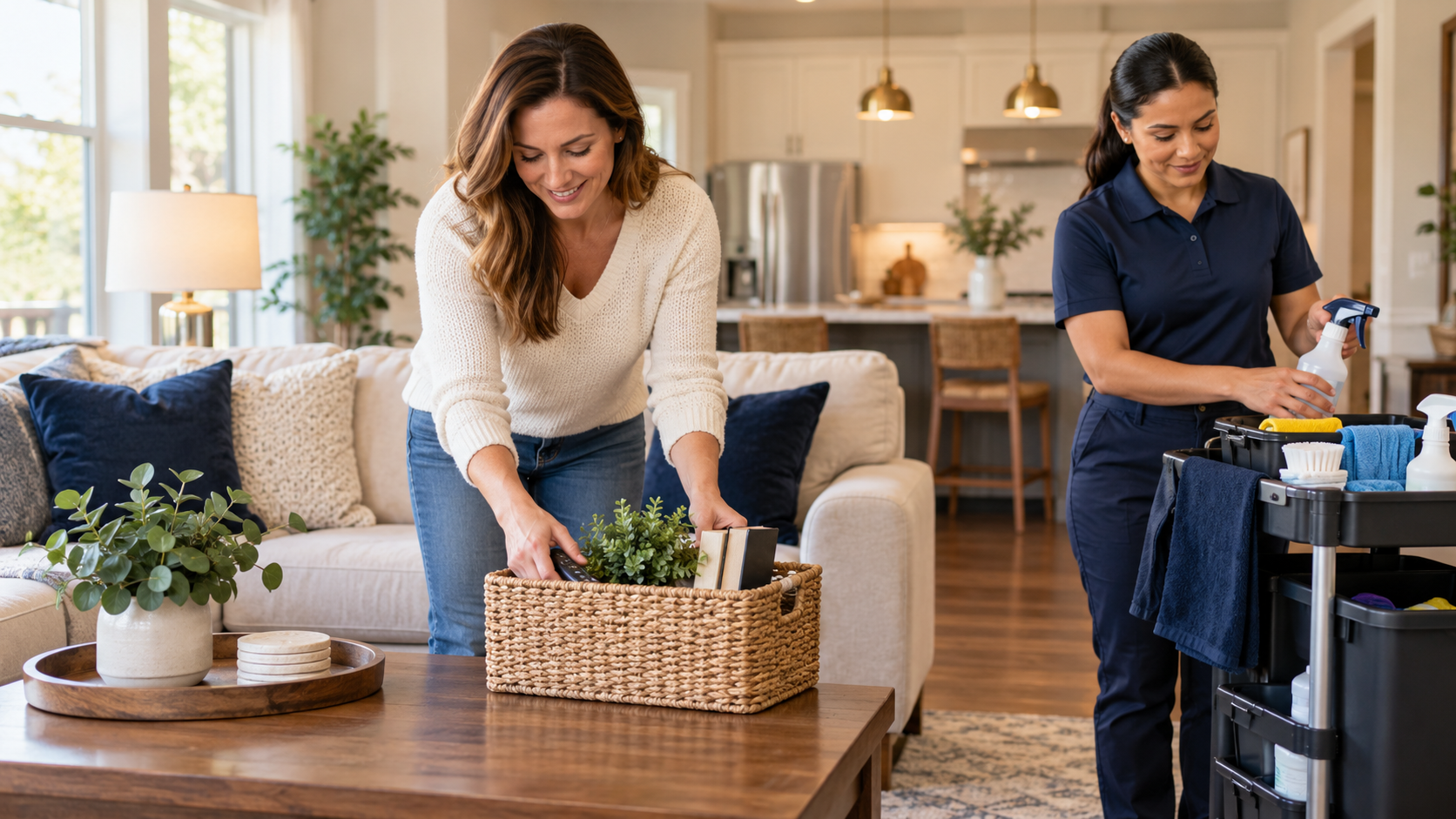
A professional deep cleaning can address the detailed work that routine upkeep often leaves behind: buildup around fixtures, dust on overlooked surfaces, floor edges, baseboards, cabinet fronts, and other areas that need concentrated attention. A small amount of preparation before the cleaning team arrives can help the appointment run smoothly and keep the focus on cleaning rather than sorting belongings.
For homeowners in Racine, Kenosha, Milwaukee, Pleasant Prairie, Mount Pleasant, Caledonia, Oak Creek, Franklin, Burlington, and surrounding Southeast Wisconsin communities, this guide explains what to do before a scheduled deep cleaning—and what you can leave for the professionals.
Confirm the scope before cleaning day
“Deep cleaning” does not have one universal definition. Ask what rooms and tasks are included, which services are optional, and whether the team needs access to appliance interiors, cabinets, closets, a basement, or other areas.
Discuss priorities when booking and identify materials requiring special care, such as natural stone, specialty flooring, delicate fixtures, or older finishes.
Clear expectations help the cleaning provider plan the right amount of time, equipment, and supplies. They also make the final walkthrough more useful because everyone is reviewing the same agreed scope.
Reduce clutter without pre-cleaning
You do not need to clean the home before the cleaners arrive. However, removing loose objects from the work area gives the team better access to surfaces.
Pick up clothing, toys, paperwork, dishes, and personal items from floors and counters. Place small bathroom products in a basket. Clear crowded nightstands and dressers if you want those surfaces cleaned. In the kitchen, put away food and decide whether countertop appliances should remain in place.
If cabinet, appliance, or closet interiors are included, empty them first unless your provider gives different instructions.
Keep valuables, medications, identification documents, financial papers, firearms, and irreplaceable objects secured in a private location. This protects your privacy and prevents fragile or important items from being moved accidentally.
Make access simple and safe
Confirm how the team will enter the home and where they may park. Provide gate, lobby, alarm, or lockbox instructions through the booking method approved by the company. If you will not be home, make sure the access plan has been tested before the appointment.
Clear walkways, stairs, and doorways. Move lightweight obstacles, but do not move heavy furniture unless it is safe and coordinated in advance. Point out unstable furniture or other hazards.
If certain rooms, cabinets, or belongings are off-limits, identify them clearly during the walkthrough or in the service notes.
Plan for children and pets
Choose a secure, comfortable location for pets away from open doors, equipment, cords, and cleaning activity. Tell the team about animals in the home even if they will be crated or kept in another room. Provide any essential instructions about gates or doors that must remain closed.
Children should also remain away from active work areas. A deep cleaning may involve wet floors, equipment, and products that need to stay undisturbed while being used according to label directions.
The Centers for Disease Control and Prevention advises storing cleaning and disinfecting chemicals out of reach of children and pets. It also warns against mixing products, which can be hazardous. A professional team should manage its own products, but homeowners should secure any household chemicals left in accessible areas.
Source: CDC guidance for cleaning and disinfecting your home
Share allergies, sensitivities, and product concerns
Tell the provider in advance if anyone in the household has fragrance sensitivities, asthma triggers, allergies, or other product concerns. Do not assume that “green,” “natural,” or “fragrance-free” means the same thing to every manufacturer or service provider.
The U.S. Environmental Protection Agency recommends following product labels, avoiding chemical mixing, and ventilating during cleaning, sanitizing, or disinfecting. Its Safer Choice program can also help consumers identify products that meet EPA criteria for safer chemical ingredients and performance.
Source: EPA guidance for improving the indoor environment and EPA Safer Choice
Identify stains, damage, and moisture concerns
Point out problem areas rather than waiting for the team to discover them. Examples include carpet spots, cooking residue, soap buildup, pet hair, adhesive, or marks on walls and trim.
Cleaning may remove residue, but it cannot repair worn finishes, cracked grout, damaged flooring, failed caulk, or permanent discoloration. Disclose unknown material, bodily fluids, pest waste, suspected mold, or other hazards first; some conditions require specialized help.
If there is an active leak or moisture problem, address the source before the appointment whenever possible.
Prepare kitchens and bathrooms thoughtfully
In the kitchen, wash or put away dishes, remove expired food if the refrigerator interior is included, and clear the sink. If oven cleaning is scheduled, remove stored pans and confirm whether racks should remain inside.
In bathrooms, remove towels, bath mats, toiletries, and personal grooming items from the surfaces you want cleaned. Make sure plumbing fixtures are operational and report slow drains or leaks as maintenance concerns.
The CDC says routine cleaning with soap or detergent is sufficient in many homes. Disinfection may be appropriate when someone is sick or at higher risk; follow the product’s required contact time.
Decide whether to stay home
Ask the provider whether homeowners typically remain during service. If you stay, choose a room that will be cleaned last and be prepared to move when the team reaches it. If you leave, confirm how you will receive completion notices and how the home should be secured afterward.
Heating, cooling, electricity, and running water should remain available unless the provider says otherwise. Reasonable ventilation may also be needed depending on the products and tasks involved.
Complete a final walkthrough
At the beginning of the appointment, review priorities, access limits, fragile surfaces, and requested add-ons. Afterward, inspect the completed scope while the details are fresh. If something appears to have been missed, refer to the agreed checklist and communicate clearly.
Preparing for a deep cleaning should not mean doing the cleaner’s job. The goal is simply to provide safe access, protect personal items, and clarify expectations so the team can spend its time on the detailed cleaning you requested.
Ready to build a cleaning plan for your Southeast Wisconsin home? Review our cleaning services, schedule a cleaning request, or contact RNC Cleaning Services. If you are preparing a rental between residents, see our Apartment Turnover Cleaning Checklist for Southeast Wisconsin Property Managers.
Frequently Asked Questions
Do I need to vacuum before a professional deep cleaning?
Usually not. Pick up loose objects and identify problem areas, then let the cleaning team perform the work included in your service agreement.
Should I provide cleaning supplies?
Ask during booking. Many professional cleaners bring supplies and equipment, but special surfaces or customer-requested products may require advance coordination.
How long does a deep cleaning take?
Timing depends on the home’s size, condition, layout, selected tasks, and number of cleaners. Provide accurate details so the company can plan appropriately.
What should I do with pets during the appointment?
Keep pets securely away from work areas and entry doors, and tell the cleaning team where they are located.