
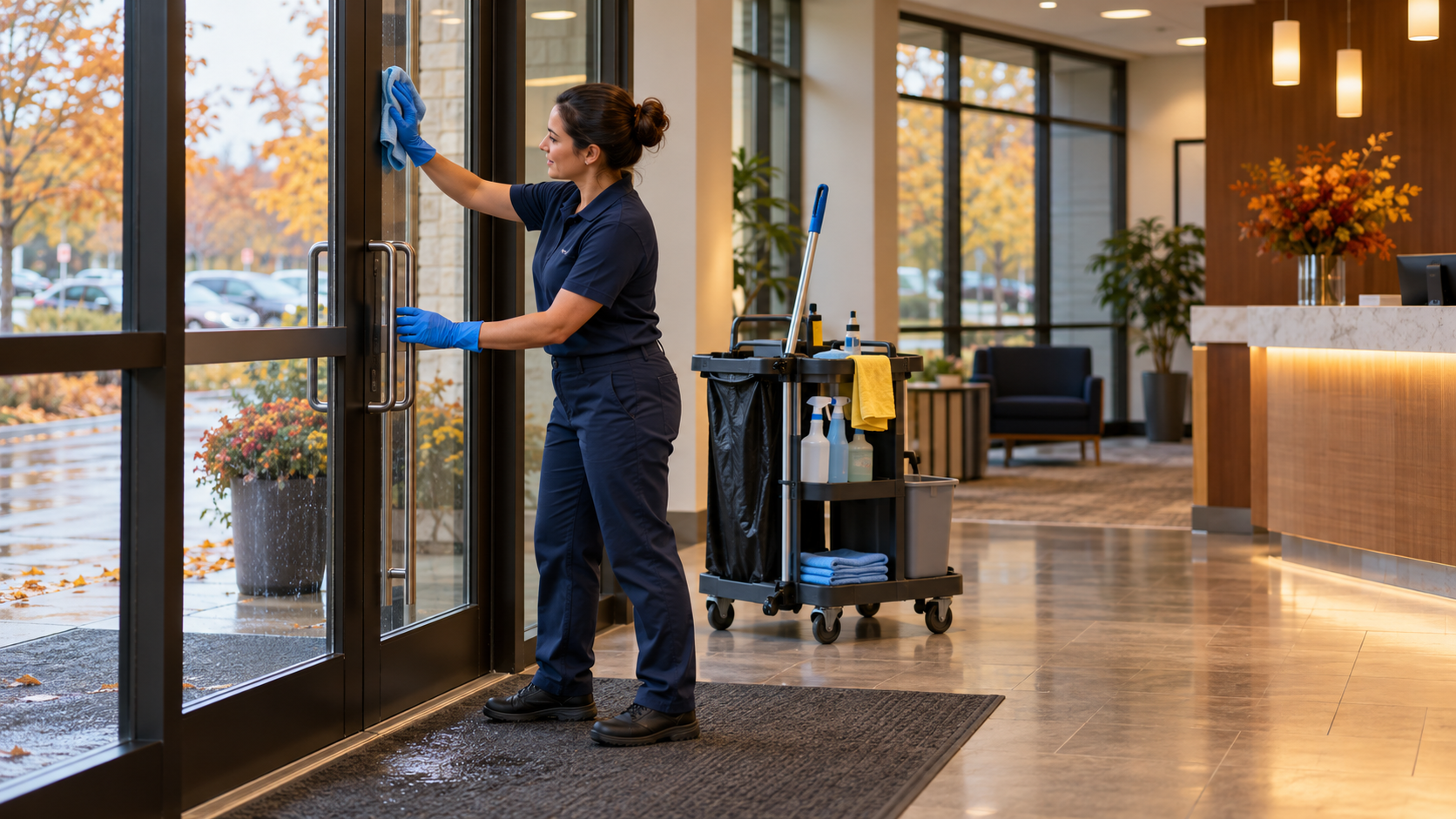
Fall in Southeast Wisconsin brings cooler air, changing leaves, more rain, and a steady increase in the dirt and moisture tracked through workplace entrances. For offices, churches, retail stores, apartment communities, warehouses, and other shared facilities, this is a practical time to review the cleaning plan before winter makes building maintenance even more demanding.
A good fall cleaning program is not simply a deeper version of the usual routine. It focuses attention on the areas affected by seasonal traffic, wet weather, closed windows, and more time spent indoors. The checklist below can help facility managers and property managers in Racine, Kenosha, Milwaukee, Pleasant Prairie, Mount Pleasant, Caledonia, Oak Creek, Franklin, Burlington, and nearby communities prepare their buildings for the months ahead.
1. Start at the entrance
Your entrance is the first place where fall weather reaches the building. Leaves, soil, grit, and rainwater can quickly move from the doorway into lobbies and hallways.
Inspect entry mats to make sure they lie flat, remain absorbent, and cover enough walking distance to collect debris from shoes. Vacuum or clean mats on a schedule based on traffic rather than waiting until they look heavily soiled. Glass doors, handles, frames, and nearby ledges also need regular attention because fingerprints and water spots are especially visible in a bright reception area.
During wet weather, address moisture promptly and use appropriate warning signage when floors are being cleaned. Pay particular attention to corners and the edges of mats, where dirt and water can collect unnoticed.
2. Reassess high-touch surfaces
As people spend more time indoors, shared touchpoints deserve a clearly defined routine. The Centers for Disease Control and Prevention recommends regularly cleaning high-touch surfaces and cleaning other surfaces when visibly dirty. Examples include door handles, counters, stair rails, elevator buttons, touchpads, restroom fixtures, and desks.
Make a location-specific list instead of relying on a generic checklist. An office may prioritize conference-room controls, shared printers, and breakroom handles. A church may add sanctuary doors, classroom tables, and nursery check-in areas. A retail location may focus on carts, counters, payment areas, and fitting-room handles.
Cleaning and disinfecting are not interchangeable. The CDC advises cleaning surfaces before sanitizing or disinfecting because dirt can interfere with how those products work. Disinfection may be appropriate when someone has been ill or when a facility has a specific operational need, but product labels and required wet-contact times must be followed.
Source: CDC guidance for cleaning and disinfecting facilities
3. Give restrooms and breakrooms a closer review
Restrooms and breakrooms combine frequent use, moisture, food residue, and many shared touchpoints. In addition to routine fixture and surface cleaning, inspect the less obvious areas: dispenser faces, stall partitions, cabinet pulls, refrigerator handles, chair backs, appliance controls, and the floor edges behind doors.
Check whether soap, paper products, and liners are replenished consistently. Report slow drains, leaks, damaged dispensers, loose fixtures, or persistent odors to the appropriate maintenance contact rather than treating them only as cleaning problems.
4. Remove dust from overlooked surfaces
When windows stay closed and heating systems begin operating, accumulated dust becomes more noticeable. Add a rotating detail-cleaning schedule for vents, return grilles, baseboards, blinds, interior window ledges, partition tops, door frames, and other horizontal surfaces.
Electronics require special care. Follow the equipment manufacturer’s cleaning instructions for monitors, touch screens, keyboards, remotes, and control panels. The CDC notes that wipeable covers can make some electronics easier to clean, but the correct approach depends on the device.
5. Match products and methods to each surface
More chemical is not necessarily better. Use products designed for the material being cleaned, follow label directions, and never mix products unless the manufacturer explicitly permits it. Staff should have access to required safety information and appropriate protective equipment.
The U.S. Environmental Protection Agency’s Safer Choice program helps purchasers identify products whose ingredients meet the program’s health and environmental criteria while also meeting performance standards. The EPA also advises limiting disinfectants to situations and surfaces where they are appropriate rather than using them for every general cleaning task.
Source: EPA Safer Choice program and EPA guidance for identifying greener cleaning products
6. Adjust frequency to actual building use
A fixed checklist can miss seasonal changes. Review the building’s busiest days, evening programs, customer traffic, deliveries, tenant turnovers, and special events. A church with weekend services, a retail store preparing for holiday traffic, and an office using a hybrid schedule will not need the same timing.
Separate tasks into three groups:
- Every visit: entrances, visible debris, restrooms, waste, and priority touchpoints.
- Scheduled detail work: baseboards, vents, interior glass, upholstery, and edge cleaning.
- Condition-based work: spills, weather-related soil, event cleanup, and areas affected by illness.
This approach makes the scope easier to inspect and reduces the chance that important periodic tasks disappear behind daily work.
7. Document expectations before winter
Walk through the facility with the cleaning checklist in hand. Note the desired frequency, access restrictions, security procedures, supply responsibilities, and any surface-specific instructions. Decide who receives service updates and how concerns should be reported.
A cleaner fall starts with a clear plan
Seasonal cleaning is most effective when it reflects how the building is actually used. A thoughtful plan for entrances, high-touch areas, shared spaces, dust control, and periodic detail work can help keep a Southeast Wisconsin workplace clean, orderly, and ready for winter.
RNC Cleaning Services can help you review your facility’s needs and build an appropriate cleaning plan. Explore our cleaning services, schedule a cleaning request, or contact RNC Cleaning Services to discuss your office, church, retail location, apartment community, warehouse, or other commercial property.
Frequently Asked Questions
How often should a workplace entrance be cleaned in fall?
The right frequency depends on traffic and weather. Inspect entrances throughout the day during wet or windy conditions and adjust mat, glass, and floor care when soil or moisture accumulates.
Does every surface need to be disinfected daily?
Not necessarily. The CDC says regular cleaning is sufficient in many situations. Disinfection may be appropriate for certain high-touch areas, after illness, or under facility-specific requirements. Always follow the product label.
Can the same cleaning process be used for offices, churches, and warehouses?
No. Each facility has different traffic patterns, surfaces, safety considerations, and operating schedules. The cleaning scope should be tailored to the building and its use.
When should we update our commercial cleaning plan?
Review it whenever building use, staffing, events, weather, or problem areas change. A formal seasonal review in fall is a practical way to prepare for winter conditions.